

5:2 vs 16:8: Which Fasting Method Is Easier to Stick To?
Key takeaways
- 5:2 and 16:8 create different kinds of friction, even if both are forms of intermittent fasting.
- 16:8 spreads the effort across more days, while 5:2 concentrates it into fewer days.
- The easier method is usually the one that fits your routine and social life with less negotiation.
5:2 and 16:8 are both intermittent fasting methods.
They do not feel the same.
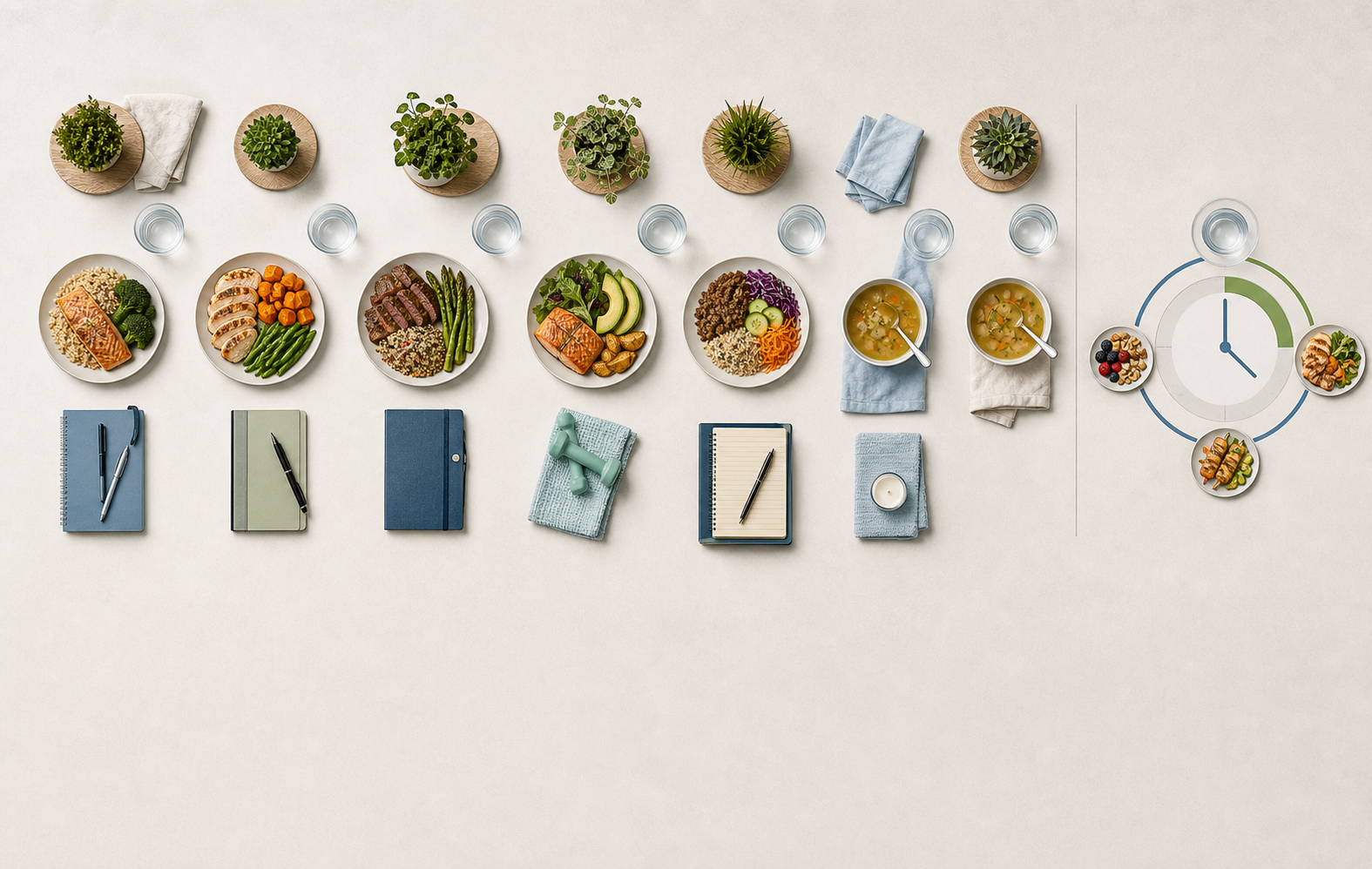
16:8 spreads the structure across most days. 5:2 concentrates the effort into two lower-intake days each week. One asks for daily rhythm. The other asks for occasional harder days.
The easier method is the one that creates less friction in your real week.
How the methods differ
Here is the basic comparison:
| Method | Basic idea | Main friction |
|---|---|---|
16:8 | Fast for 16 hours, eat during an 8-hour window | Daily schedule fit |
5:2 | Eat normally 5 days, use 2 lower-intake days | Harder low-intake days |
Both methods appear in the intermittent fasting research, but the evidence does not make one universally best for every person (Zou, Zhang et al., 2024, Semnani-Azad, Khan, Sievenpiper et al., 2025).
That is why this is mostly an adherence question.
When 16:8 may be easier
16:8 can be easier if you like a daily rhythm.
It may fit if:
- you naturally prefer a later first meal
- your mornings are predictable
- family meals still fit inside the window
- you do not want to manage two unusual days each week
The downside is that it touches nearly every day. If the schedule clashes with work, training, breakfast needs, or social life, the friction shows up constantly.
When 5:2 may be easier
5:2 can be easier if you dislike daily restrictions.
It may fit if:
- your weekdays vary too much for a fixed eating window
- you prefer normal meal timing most days
- you can plan two lower-intake days without social conflict
- you do not mind more concentrated effort
The downside is that those two days can feel much harder. Some people would rather manage a mild daily boundary than a sharper twice-weekly restriction.
What the adherence research suggests
People do not stick with fasting only because of physiology. They stick with it when it fits work, social life, exercise, hunger, and routine (O’Connor, Bailey, Boyd et al., 2022).
A meta-analysis comparing alternate-day fasting, the 5:2 diet, and time-restricted eating reported that different approaches can support weight loss, but the practical burden differs by method (Varady, Rolands et al., 2023). That is the useful takeaway for a reader choosing between 5:2 and 16:8: the best method on paper still loses if it breaks your week.
Choose by friction, not identity
Ask these questions:
- Do I want the same rule most days?
- Do I want most days to feel normal?
- Which method causes fewer social conflicts?
- Which one protects training, sleep, and mood?
- Which one am I less likely to compensate for later?
If you like daily rhythm, start with 14:10 or 16:8. If you hate daily windows but can plan two lower-intake days, 5:2 may be worth learning about.
For most beginners, I would still start with a daily window first because it is easier to test gently. You can always compare more structured methods later.
Safety note
The 5:2 method may be a poor fit if lower-intake days trigger binge-restrict cycles, dizziness, irritability, or medication issues. If you have diabetes, take medication affected by meals, are pregnant, are under 18, have a history of disordered eating, or have a medical condition, get clinician guidance before trying either method.
References
- Zou, Zhang et al., 2024. Intermittent fasting and health outcomes: umbrella review of systematic reviews and RCTs
- Semnani-Azad, Khan, Sievenpiper et al., 2025. Intermittent fasting strategies and cardiometabolic outcomes: network meta-analysis of RCTs
- Varady, Rolands et al., 2023. Meta-analysis comparing ADF, 5:2 diet, and TRE for weight loss
- O’Connor, Bailey, Boyd et al., 2022. A qualitative exploration of facilitators and barriers of adherence to time-restricted eating