

How to Intermittent Fast Without Counting Calories
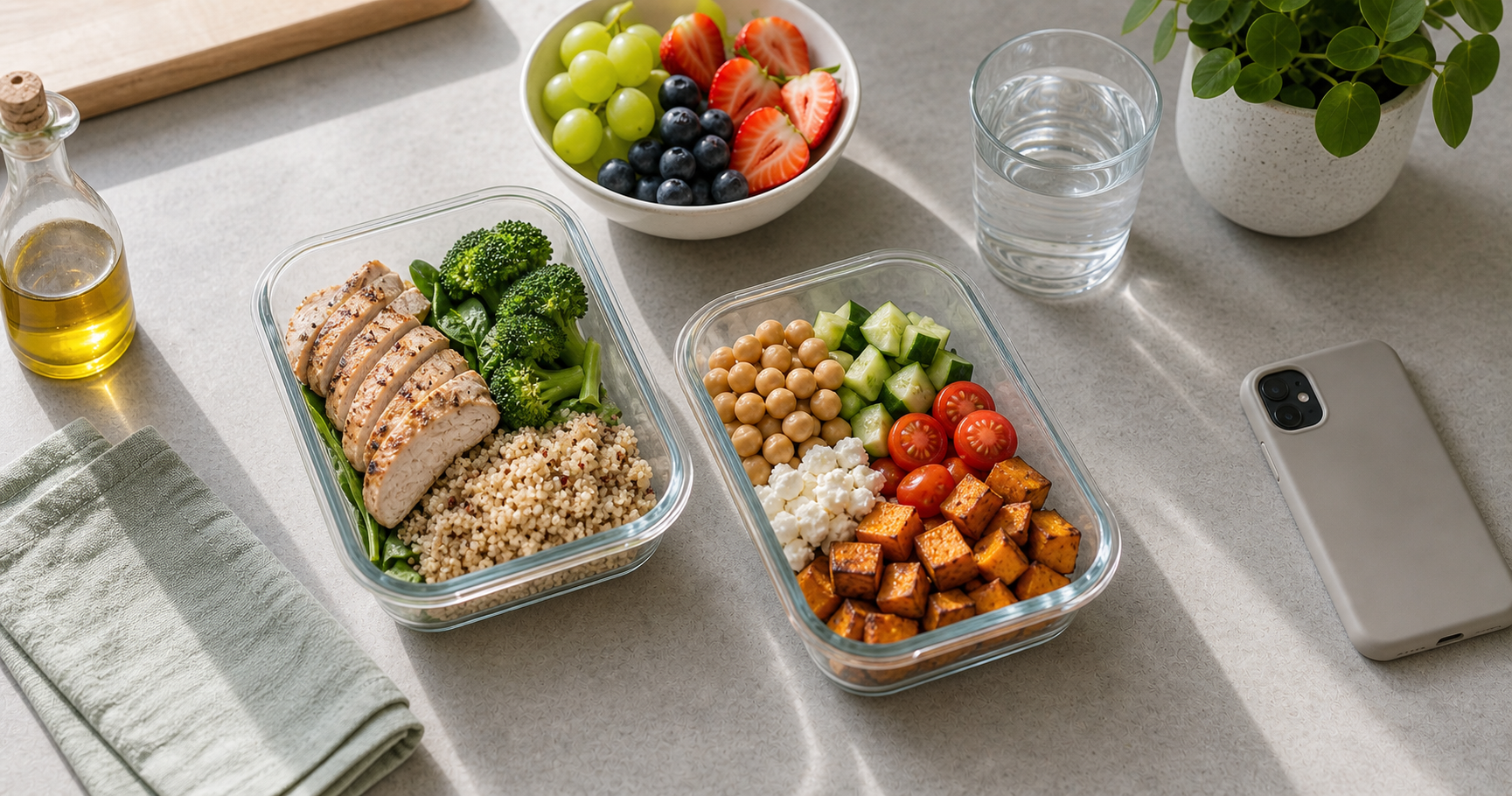
Key takeaways
- A schedule can simplify eating without requiring constant calorie tracking.
- Routine still matters: what you eat during the eating window affects how the fast feels.
- The goal is fewer decisions, not a hidden binge-restrict cycle.
Yes. Intermittent fasting can work without calorie counting.
That is one reason people try it in the first place. A dinner cutoff and a later breakfast can be easier to repeat than logging every bite.
But “without counting calories” does not mean “without structure.” If the eating window turns into random snacking, oversized catch-up meals, or a constant reward mindset, the fast stops simplifying anything.
The better goal is not zero awareness. It is lower decision load.
That is what makes this version sustainable.
What fasting can simplify and what it cannot
Intermittent fasting can simplify when you eat. It does not remove the need to notice what happens during the eating window.
That distinction matters because the evidence around time-restricted eating is not “meal timing beats everything no matter what.” Reviews and meta-analyses suggest that intermittent fasting can improve weight and cardiometabolic markers for some people, but those benefits are still shaped by total intake, routine fit, and adherence (Zou, Zhang et al., 2024, Semnani-Azad, Khan, Sievenpiper et al., 2025, Ma, Du, Chang et al., 2024).
So if you want to use fasting without calorie tracking, the right mindset is:
- let the schedule reduce grazing and decision fatigue
- keep meals boring enough to be stable
- use a few guardrails instead of full logging
That gets you most of the structure without turning the routine into homework.
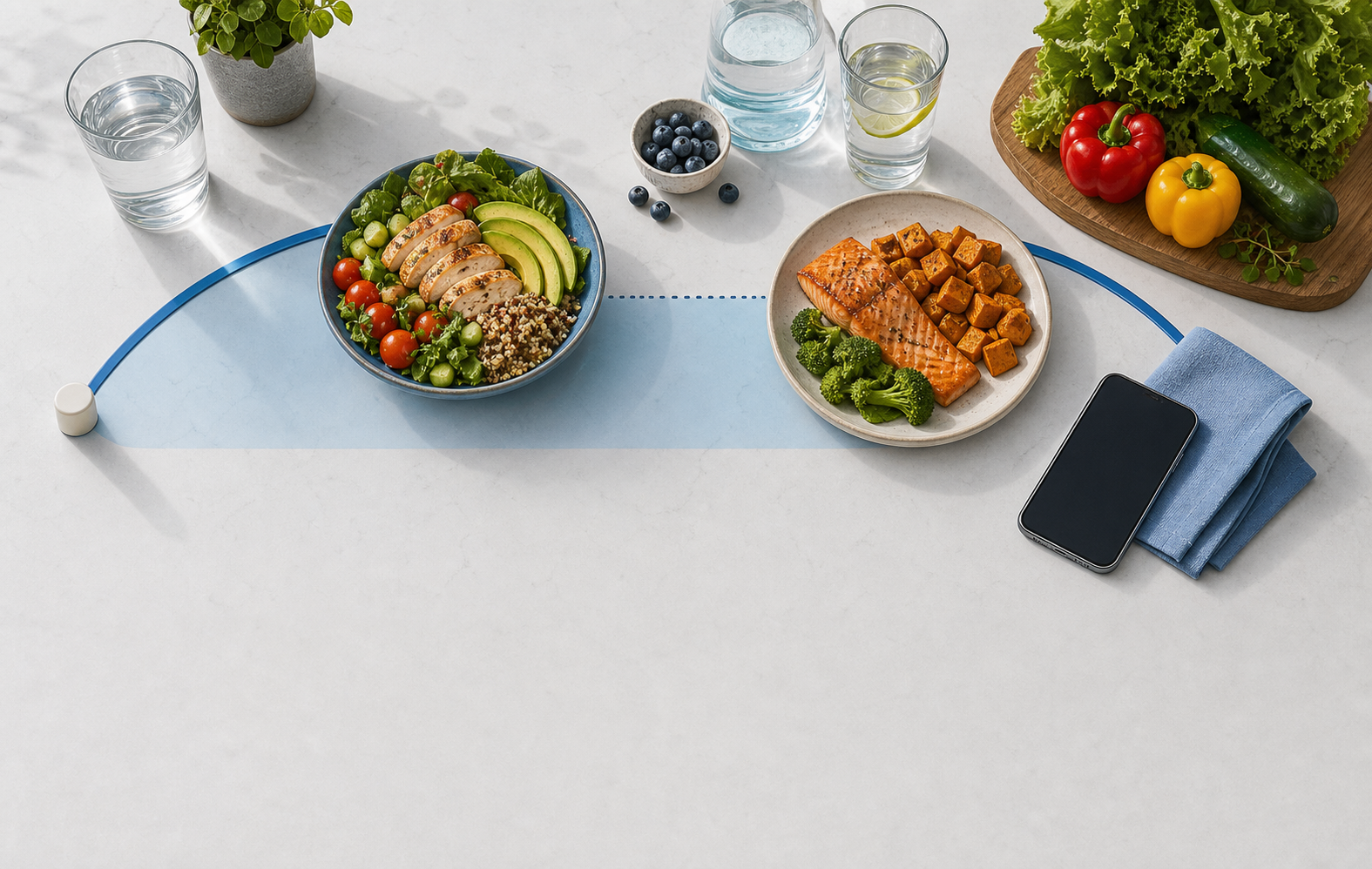
Use guardrails, not math
Here is a simpler framework than calorie counting:
| Guardrail | What it does |
|---|---|
| Keep a consistent eating window most days | Reduces all-day snacking and random drift |
| Build meals around protein, fiber, and actual food | Makes the fasting window easier to repeat |
| Sit down for meals instead of grazing through the window | Keeps the plan from becoming constant eating |
| Stop using the first meal as a reward | Reduces rebound overeating |
| Use hunger, energy, sleep, and consistency as feedback | Gives you signal without obsessive tracking |
This is usually enough for a beginner or someone who deliberately does not want to log intake.
You do not need a spreadsheet to notice that a routine is working better when:
- late-night snacking drops
- meals feel more predictable
- hunger feels more manageable
- the plan still works on busy days
Those are meaningful outcomes even before you start talking about exact calories.
What a no-tracking fasting routine can look like
A workable version often looks like this:
- Pick a schedule you can actually repeat, such as
12:12,14:10, or16:8. - Eat two or three normal meals during the eating window.
- Make those meals substantial enough that the fast does not turn into a rebound cycle.
- Keep snacks intentional rather than automatic.
That approach lines up with what the adherence research suggests. People do better when the routine fits work, social life, and daily rhythm instead of demanding constant compensation (O’Connor, Bailey, Boyd et al., 2022).
The mixed-methods and meta-analytic evidence also points in the same direction. Time-restricted eating can be a reasonable weight-loss strategy for some people, but it is not a free pass around overall behavior. Sustainability still matters (Guan, Mai, Qiu, Zuo, 2025).
What not counting calories does not mean
It does not mean:
- eating anything as long as it fits the window
- turning the eating window into a six-hour snack session
- using the fast to justify very large “earned” meals
- ignoring the effect of alcohol, desserts, or ultra-processed convenience foods on hunger and repeatability
You can avoid counting without pretending those things do not matter.
That is the difference between a low-friction routine and a vague one.
How to tell whether the no-tracking version is working
Use these four checkpoints instead of calorie math:
1. Hunger
Are you hungry sometimes, or are you spending the whole fasting window preoccupied with food?
2. Energy
Do you feel normal enough to work, train, and think clearly?
3. Sleep
Does the schedule protect sleep, or are you pushing the fasting window so hard that nights get worse?
4. Repeatability
Can you do this next week without needing a reset every three days?
That last one is the most important. A more complicated plan is not better if it burns out faster.
When you may need more structure than this
Not counting calories is useful for some people because it lowers friction. For other people, it removes too much signal.
You may need more structure if:
- the eating window turns into constant nibbling
- you are frequently overeating after the fast
- you are not getting enough protein or meal quality drops sharply
- your schedule feels simple on paper but chaotic in practice
That does not always mean full calorie tracking. Sometimes it just means setting clearer meal rules, such as two full meals and one optional snack instead of endless improvisation.
The best version is the one that feels calm
That is the test.
Intermittent fasting without calorie counting works best when it reduces noise. If it lowers decision fatigue, reduces grazing, and helps you keep meals more regular, it is doing its job. If it becomes a cycle of restriction, compensation, and confusion, the routine needs more structure or a shorter fasting window.
If you need help choosing the schedule first, start with Best Intermittent Fasting Schedule for Beginners.
Safety note
Less tracking is not always less stressful. If you have a history of disordered eating, a tendency toward binge-restrict cycles, diabetes, medication timing issues, pregnancy, or another medical condition that changes how you should eat, get clinician guidance before using fasting as a self-directed routine.
References
- Zou, Zhang et al., 2024. Intermittent fasting and health outcomes: umbrella review of systematic reviews and RCTs
- Semnani-Azad, Khan, Sievenpiper et al., 2025. Intermittent fasting strategies and cardiometabolic outcomes: network meta-analysis of RCTs
- Ma, Du, Chang et al., 2024. Time-restricted eating improves health because of energy deficit and circadian rhythm: Meta-analysis
- Guan, Mai, Qiu, Zuo, 2025. Is time-restricted eating a healthy choice to lose weight? Mixed-methods study with meta-analysis
- O’Connor, Bailey, Boyd et al., 2022. A qualitative exploration of facilitators and barriers of adherence to time-restricted eating