

What Can You Drink While Fasting?
Key takeaways
- Water is the default drink during a fast.
- Unsweetened coffee and tea are common choices, but the details depend on your goal.
- Many fasting questions come down to calories, sweeteners, and whether the drink makes adherence easier or harder.
This question gets overcomplicated fast.
The simple version is:
- Water is the default.
- Plain sparkling water is usually fine.
- Plain unsweetened tea is usually fine.
- Plain black coffee is commonly treated as compatible with a fasting routine.
The gray area starts when a drink adds calories, sweeteners, cream, milk, broth, or anything else that turns a clean boundary into a “maybe.”
That is why the best beginner rule is not “debate every beverage.” It is “keep the list short.”
Intermittent fasting protocols are built around periods of eating and periods of not eating, even though the exact rules people follow vary by protocol and goal (Rebello, Zhang, Anderson et al., 2024, Semnani-Azad, Khan, Sievenpiper et al., 2025). If your goal is a simple daily fasting routine, the most reliable approach is to use drinks that do not meaningfully blur that distinction.
What usually fits during a fast
This table covers the practical version, not the most argumentative version.
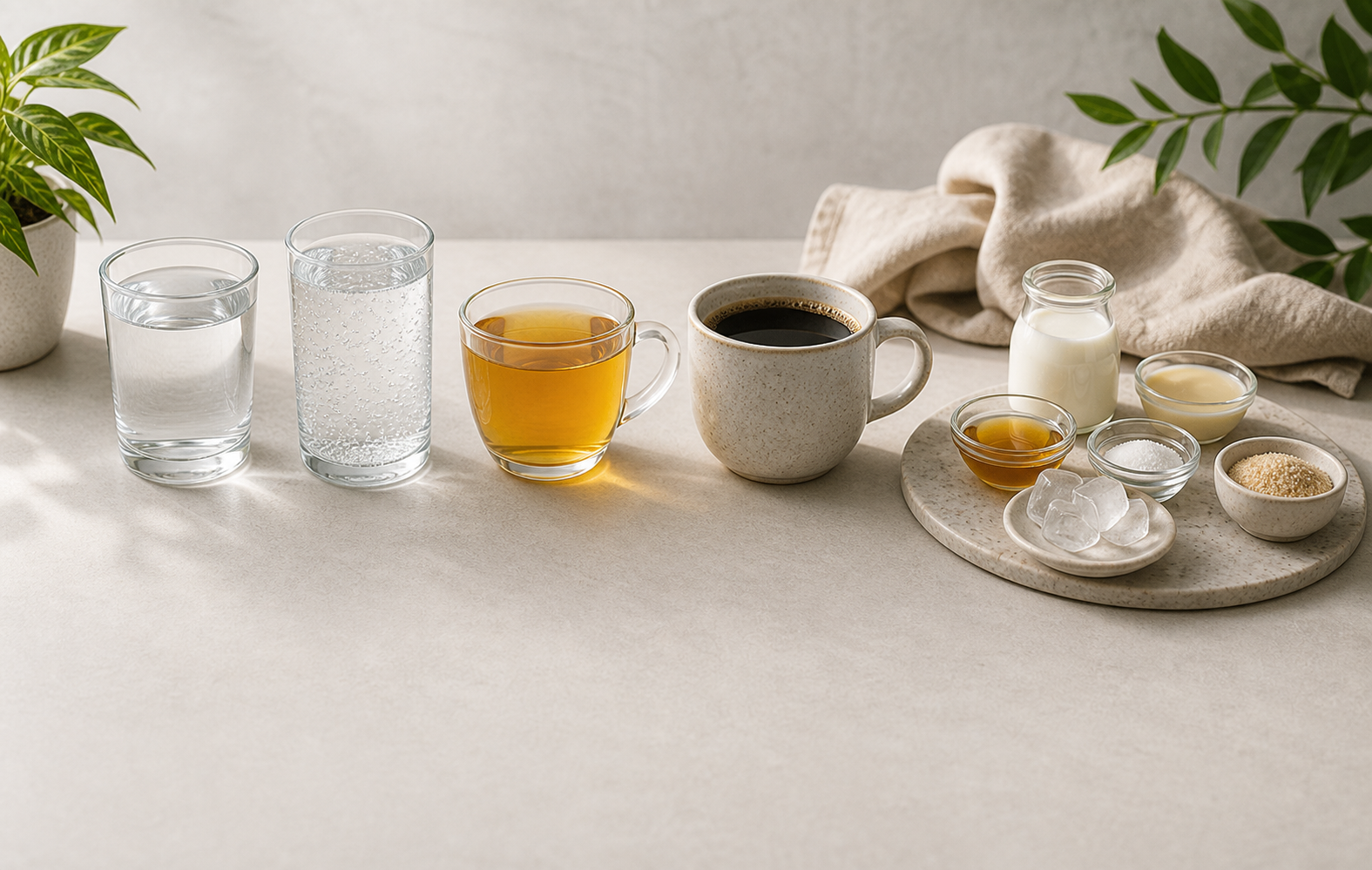
| Drink | Usually fits a fast? | Why | Watch out for |
|---|---|---|---|
| Water | Yes | Hydration without calories | None, unless a clinician gave you different instructions |
| Plain sparkling water | Usually yes | Same basic role as water | Flavors can make some people hungrier |
| Plain tea | Usually yes | Minimal or no calories, easy routine fit | Sweeteners, milk, creamers |
| Black coffee | Usually yes | Common fasting drink, minimal energy | Add-ins change the answer; caffeine can worsen jitters |
| Electrolytes without sugar | Sometimes | Can help in some contexts | Labels vary a lot; some products include calories or sweeteners |
| Zero-calorie sweetened drinks | Depends | May help some people adhere | Can increase cravings or turn fasting into all-day beverage management |
| Broth | Usually no for a routine daily fast | Not a no-intake drink in practice | More relevant to other fasting contexts |
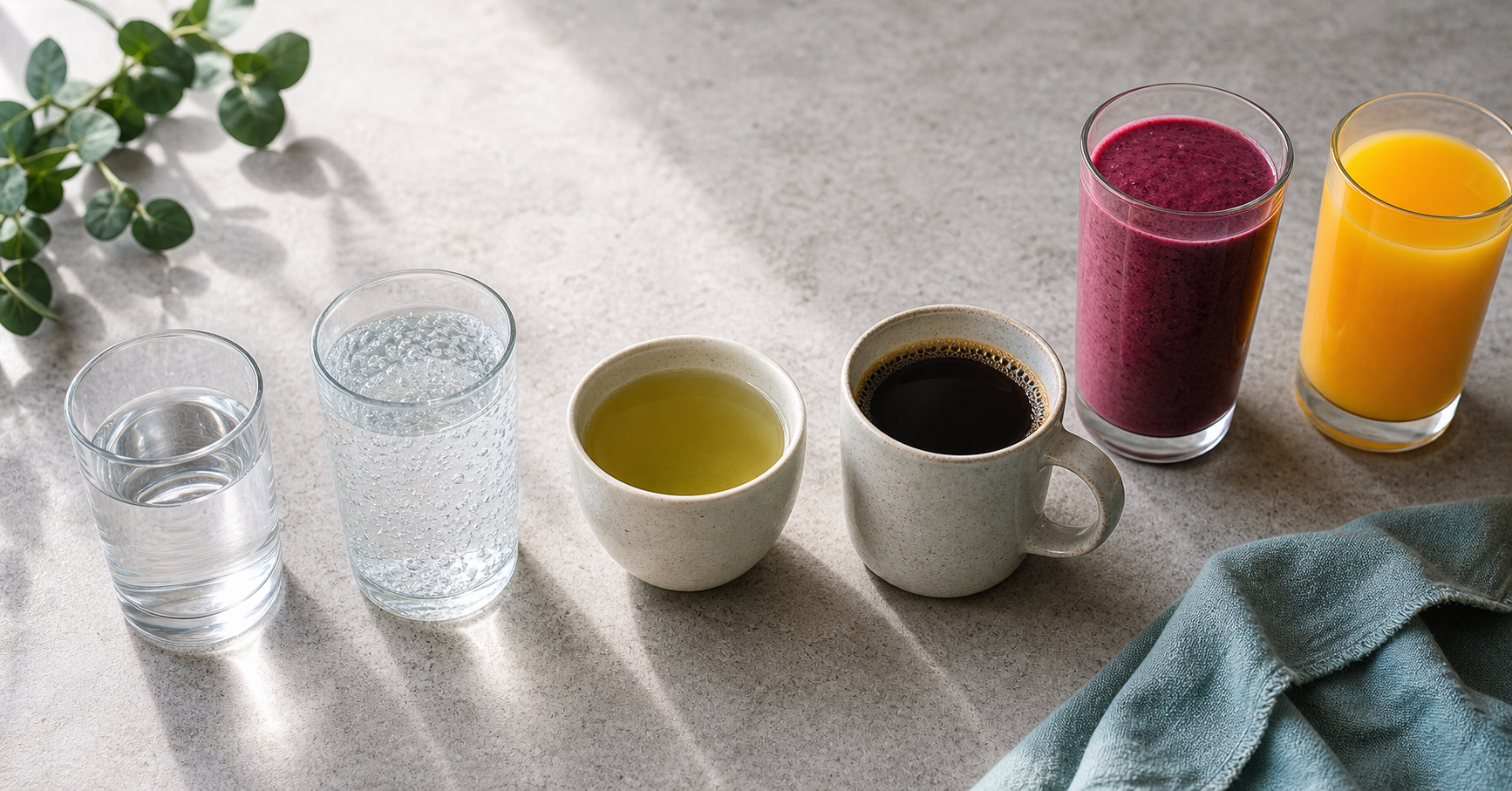
| Juice, soda, milk drinks, smoothies, protein shakes | No | These are energy-containing drinks | They belong in the eating window |
For most readers, the useful answer is not to maximize the “depends” category. It is to stay mostly in the first four rows.
The cleanest rule is also the easiest rule
If you are new to fasting, use this default:
- water
- plain sparkling water
- plain tea
- plain black coffee if you already tolerate it well
That is enough.
You do not need a designer electrolyte mix, a sweetened “fasting soda,” or a powdered workaround for every wave of appetite. In qualitative research on time-restricted eating, people sometimes described drinking non-caloric beverages such as coffee instead of eating during the fasting window, but the larger adherence pattern still depended on how well the routine fit their life, not on beverage tricks alone (O’Connor, Bailey, Boyd et al., 2022).
That is worth remembering. Drinks can support the routine, but they should not become a whole second routine.
Where people get tripped up
Most confusion comes from one of three places.
1. Calories sneak in through add-ins
Coffee is the usual example. Black coffee is one question. Coffee with cream, sugar, collagen, butter, or flavored syrup is a different one.
The same goes for tea. Plain tea is one thing. Sweetened chai latte is not.
If the drink starts acting like a snack, it belongs in the eating window.
2. The label says “zero,” but the routine gets messy
Zero-calorie sweetened drinks are one of the biggest gray areas in practical fasting. Some people use them without trouble. Others find they increase cravings, keep the eating mindset active, or lead to more “just one more thing” exceptions.
There is not one universal answer here, which is exactly why beginners do better with simpler rules. If the drink helps you stay calm and consistent, that matters. If it turns the fast into a constant negotiation, it is probably not helping.
3. The fasting goal changes the standard
Some people mean “fasting” in a very strict sense: no energy intake, minimal stimulation, very clean boundaries.
Others mean a practical weight-management or routine-building approach: no meals, no caloric drinks, and as little friction as possible.
Those are not the same standard. Trouble starts when people mix them without realizing it.
If you want the least confusing beginner setup, use the stricter drink list. It is easier to loosen later than to start with a dozen exceptions.
What to do about electrolytes
Electrolytes are context-dependent.
For a normal overnight fast or a basic daily time-restricted eating pattern, many people do not need a special electrolyte product at all. Water is often enough.
The calculation changes if you are fasting longer, training hard, sweating heavily, or dealing with heat. Even then, product labels matter. Some mixes include sugar. Others rely heavily on flavor systems or sweeteners. If you use one, read the label and treat it as a deliberate choice, not an automatic fasting freebie.
If you are fasting because of clinician instructions, lab work, or a medical procedure, follow that definition instead of general lifestyle advice.
The shortest useful answer
If you want a fasting drink list that stays out of your way, use:
- water
- plain sparkling water
- plain tea
- plain black coffee if it agrees with you
Put everything else in the eating window unless you have a specific reason not to.
If you are trying to build the bigger routine around those choices, Best Intermittent Fasting Schedule for Beginners is the next read.
Safety note
If fasting makes you lightheaded, shaky, unusually weak, or unable to function normally, drink and eat rather than trying to win an argument about purity. If you have diabetes, kidney disease, medication timing issues, pregnancy, or another condition that changes hydration or meal needs, get clinician guidance before experimenting with fasting rules.
References
- Rebello, Zhang, Anderson et al., 2024. From starvation to time-restricted eating: a review of fasting physiology
- Semnani-Azad, Khan, Sievenpiper et al., 2025. Intermittent fasting strategies and cardiometabolic outcomes: network meta-analysis of RCTs
- O’Connor, Bailey, Boyd et al., 2022. A qualitative exploration of facilitators and barriers of adherence to time-restricted eating