

What to Eat After a Fast
Key takeaways
- The first meal after a fast should be normal, not a reward meal.
- Protein, fiber, and a steady meal structure often work better than eating whatever sounds urgent.
- How you break a fast affects hunger, energy, and whether the routine remains repeatable.
The first meal after a fast does not need to be clever.
It needs to be steady.
That is the simplest way to avoid turning a useful routine into a cycle of white-knuckling followed by overeating.
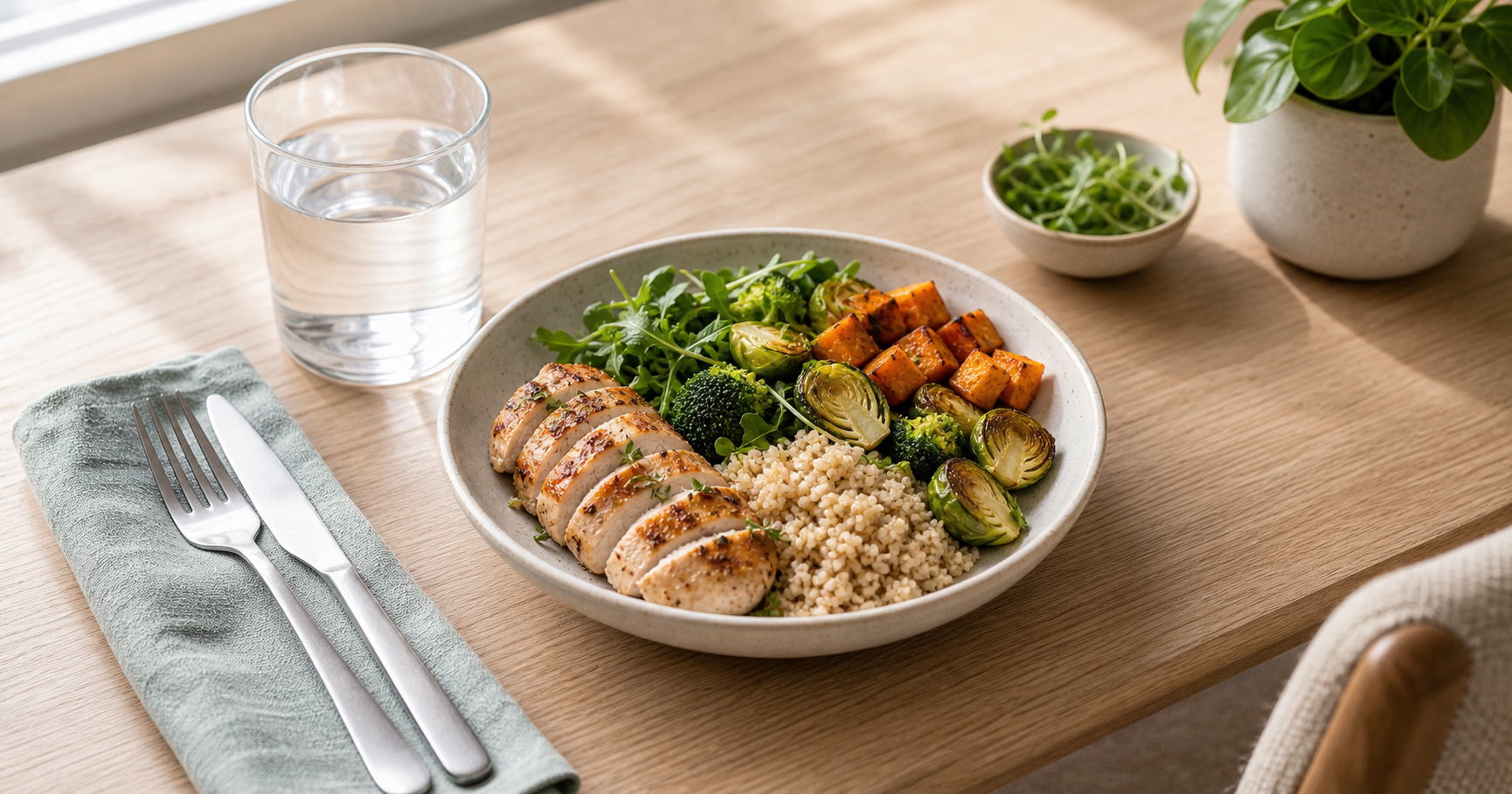
For most daily intermittent fasting routines, the best meal after a fast is a normal meal with protein, fiber, and enough substance to make the next several hours feel stable. It does not need to be tiny. It also does not need to be a reward meal.
The first meal should lower urgency
When people ask what to eat after a fast, they often mean one of two things:
- How do I stop myself from eating everything in sight?
- Is there a perfect food to break the fast?
The answer to both is less dramatic than most fasting content makes it sound.
There is no single magic re-entry food for a normal daily fasting window. But there is a useful principle: the first meal should reduce urgency, not intensify it.
That usually means:
- a clear source of protein
- some fiber or produce
- enough total food to feel like a real meal
- a pace that does not feel frantic
This works better than bouncing between extremes such as “keep it as small as possible” and “eat whatever you have earned.”
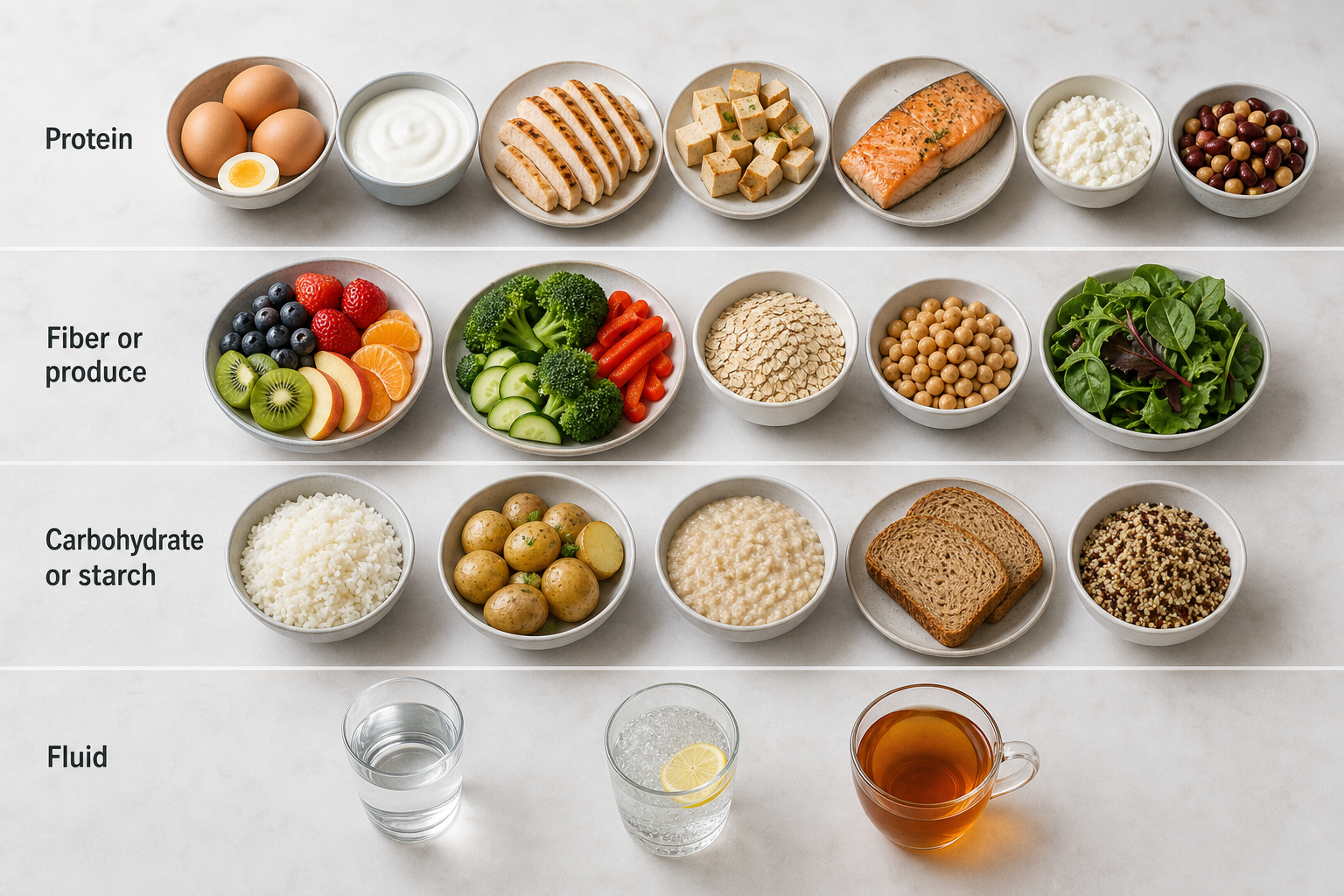
A simple post-fast meal framework
Here is the easiest version to use:
| Meal part | Why it helps | Examples |
|---|---|---|
| Protein | Makes the meal feel more complete | Eggs, Greek yogurt, chicken, tofu, fish, cottage cheese, beans |
| Fiber or produce | Helps with fullness and meal quality | Fruit, vegetables, oats, beans, greens |
| Carbohydrate or starch if wanted | Useful for training, energy, and normal eating | Rice, potatoes, oats, whole-grain toast, quinoa |
| Fluid | Helps you stop mistaking thirst for a food emergency | Water, sparkling water, plain tea |
That can be breakfast, lunch, or dinner. The structure matters more than the specific cuisine.
Examples:
- Greek yogurt, berries, nuts, and oats
- Eggs, toast, and fruit
- Chicken or tofu bowl with rice and vegetables
- Soup with beans or lentils and a side of bread
These are not “fasting foods.” They are just sane first meals.
What usually makes the next few hours feel worse
The most common problems are not mysterious.
Going too light
Some people try to break the fast with something so small that they are hungry again 30 minutes later and end up grazing through the rest of the window.
Going too hard
Other people treat the first meal as payback and eat far past comfort because the fast created too much urgency.
Skipping structure entirely
A fast can simplify the day, but that benefit disappears if the eating window opens into random snacking with no real meal in sight.
This is part of why adherence matters so much in fasting research. A routine is only useful if the day after the fast still works in practice (O’Connor, Bailey, Boyd et al., 2022).
Daily fasting is different from a very long fast
This article is mainly about normal intermittent fasting patterns such as 12:12, 14:10, or 16:8.
For those routines, a normal balanced meal is usually the right default. You do not need ceremonial refeeding.
Longer fasts are different. As fasting duration increases, physiology, symptoms, activity, and clinical context matter more, and the casual “just break it with anything” attitude becomes less useful (Rebello, Zhang, Anderson et al., 2024, Aoun, Sawaya et al., 2020).
If you are talking about a prolonged fast rather than a daily eating window, more caution is warranted. This article is not a protocol for extended fasting.
If you train, the first meal may need to be more substantial
If the fast ends near a workout or follows one, the first meal often needs more deliberate structure.
That does not mean it has to be huge. It usually means it should not be just coffee and a piece of fruit if you are expecting it to carry you through the afternoon.
Protein becomes more important here, and for many people a carbohydrate source helps recovery and satiety too. The point is not bodybuilding precision. The point is making sure the meal actually does the job.
That is one reason very compressed eating windows are not ideal for everyone. Reviews on fasting and metabolic health repeatedly come back to fit and sustainability, not just the abstract appeal of a longer fasting period (Vasim, Majeed, DeBoer, 2022, Semnani-Azad, Khan, Sievenpiper et al., 2025).
A good first meal should make the next decision easier
That is the standard I would use.
If the first meal after a fast leaves you calmer, steadier, and less reactive around food, it was probably a good meal. If it makes you want to keep picking, raid the pantry, or chase the meal with more quick snacks, the structure likely needs work.
If you want the simpler behavioral side of that, read How to Do Intermittent Fasting Without Counting Calories.
Safety note
If you manage diabetes, take medication tied to meals, are pregnant, have a history of disordered eating, or are recovering from illness, do not improvise around fasting and refeeding. Get clinician guidance. If a fasting routine repeatedly ends in dizziness, weakness, or loss of control around food, the schedule itself may not be a good fit.
References
- O’Connor, Bailey, Boyd et al., 2022. A qualitative exploration of facilitators and barriers of adherence to time-restricted eating
- Rebello, Zhang, Anderson et al., 2024. From starvation to time-restricted eating: a review of fasting physiology
- Aoun, Sawaya et al., 2020. The Safety and Efficacy of Intermittent Fasting for Weight Loss
- Vasim, Majeed, DeBoer, 2022. Intermittent Fasting and Metabolic Health
- Semnani-Azad, Khan, Sievenpiper et al., 2025. Intermittent fasting strategies and cardiometabolic outcomes: network meta-analysis of RCTs